

Get the full panel looking right again
Body lines considered
We check contours and edges, not just the centre of the dent.
Paint condition assessed
We account for cracked, stretched or broken paint in the repair plan.
Broader work available
We can move from dent correction into panel preparation and refinishing.
A dent is more than its deepest point
We assess dents, creases and distorted panels by looking at their depth, access, paint condition and position near edges or body lines. These details tell us whether the metal can be reshaped or whether broader panel work is needed. Car dent removal is most straightforward when the panel remains repairable and the affected area can be reached safely. When an impact has stretched the surface, damaged the paint or altered the panel contour, we plan the correction and finishing stages together rather than treating only the visible hollow.
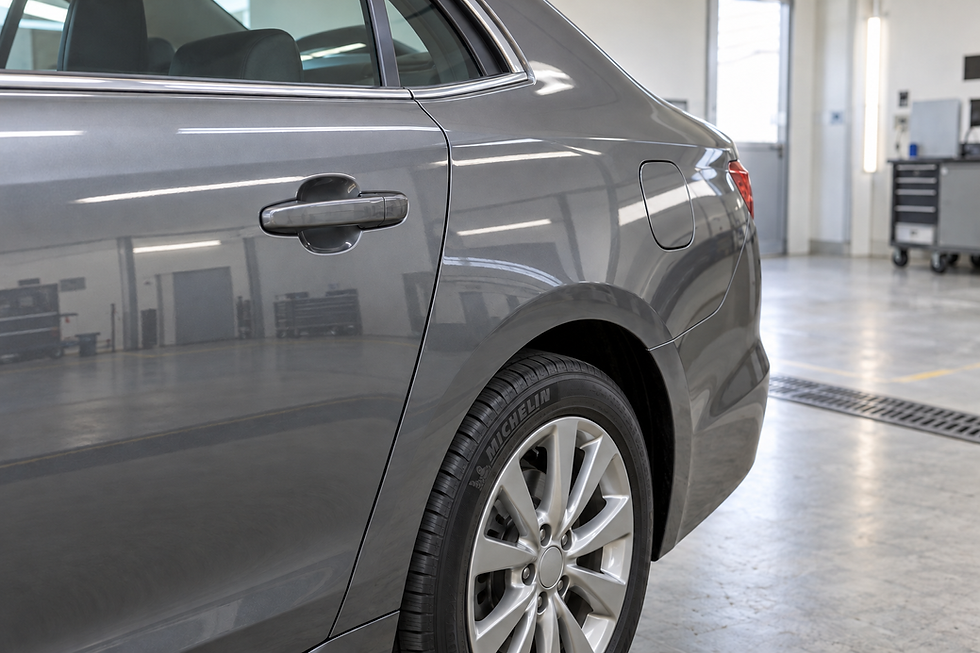
Restore the panel shape and painted surface
A repairable panel may be carefully reshaped before low areas are filled and levelled. If paint has broken or the surface needs correction, we prepare, prime and refinish it after restoring the contour. Panels with extensive distortion may need replacement instead. Accurate body lines, panel gaps and adjoining edges matter because even a smooth finish can look wrong if the shape beneath it is uneven. Our East Kilbride workshop handles dent correction and wider panel repair under one roof for a more joined-up result.
Frequently asked questions
Can you remove a dent without repainting?
It may be possible when the paint is intact, access is suitable and the dent has not sharply stretched the panel. We need to inspect its depth, position and body lines before confirming the appropriate method.
When does a damaged panel need replacement?
Replacement may be more practical when distortion is extensive, access is poor or important edges and mounting areas are badly affected. We compare the repair and replacement routes after assessing the complete panel.
Why do panel gaps matter after a repair?
Even gaps help the repaired area sit naturally beside adjoining panels. We review contours, edges and alignment because a panel can have smooth paint yet still look wrong when its shape or position is not properly restored.